


-
Fujima Kanso-o
Fujima Kanso-o is the professional Nihon Buyō stage name of dancer and choreographer Heidi S. Durning, of Kyoto, Japan. Her name ties her directly to the prestigious Fujima school of dance, one of the most prominent lineages in Kabuki choreography and classical dance. Heidi is a world-renowned dancer and choreographer. She choreographs and presents original fusion works in various countries, collaborating with artists from around the world, across many genres, and engages in projects based on cultural exchange.
-
Prajwal Ratna Vajracharya
Prajwal grew up in Kathmandu, Nepal, in a renowned family of scholars and priests of the Vajracharya caste, steeped in the traditions of the Newar culture. His Vajracharya Vishekha initiation by his father, a lineage holder in the Newar Vajrayana Buddhist tradition, ordained him to perform the rituals and ceremonies of this ancient religion. Since that time he has received additional training and initiations in Nepal to enable him to further his work, initiate others, and preside over the 2009 consecration of the Nritya Mandala Mahavihara, the first fully-functioning Newar Vajrayana Buddhist temple in the West. Prajwal is often called upon to perform sacred dances and other religious rituals throughout the world. He teaches the ancient Buddhist dance form, Charya Nritya, as part of his teaching Newar Buddhism world wide. He is considered among the finest exponents of the form.
-
Dr. Thinles Dorje
Dr. Thinles Dorje is a scholar and researcher specializing in Buddhist ritual traditions and Himalayan cultural heritage. He earned his PhD from Panjab University in Chandrigarth, an MA in Buddhist Studies from the University of Delhi, and a Shastri/BA from the Central Institute of Higher Tibetan Studies, Sarnath, Varanasi. He directs and conducts field research for Core of Culture and sits on their Board of Directors. He is also a founding member of Himalaya House, a non-profit organization dedicated to preserving Himalayan culture. A former monk, now advocate for Ladakhi culture, Dr. Thinles works as a translator, writer, and cultural researcher.
Peling Dri Cham, Sword Dance, Tamzhing Monastery, Bhutan

Core of Culture Presents:
Buddhist Dances, Movement & Mind
A five-week course with dance researcher, writer, producer, and cultural preservationist Joseph Houseal drawing upon forty years of work with ancient and Asian dance traditions and his new book, Buddhist Dances, Movement & Mind, to explore five remarkably different Buddhist movement traditions: Japan, India, Nepal, Bhutan, and Sri Lanka.
With guest experts Fujima Kanso-o, Dr. Thinles Dorje, Prajwal Vajracharya, Karen Greenspan, John Houseal, and Sujan Shrestha
Tuesdays October 6, 13, 20, 27 and November 3, 2026
5:00 - 6:30pm Central Time (Chicago)
(3pm Pacific Time | 6pm Eastern Time)
Registration
Includes one year access to video recordings of sessions and excerpts from the book corresponding to each week’s class. (See below for details on how to purchase the book with discount from the publisher.)
-
Sign Up
$150.00
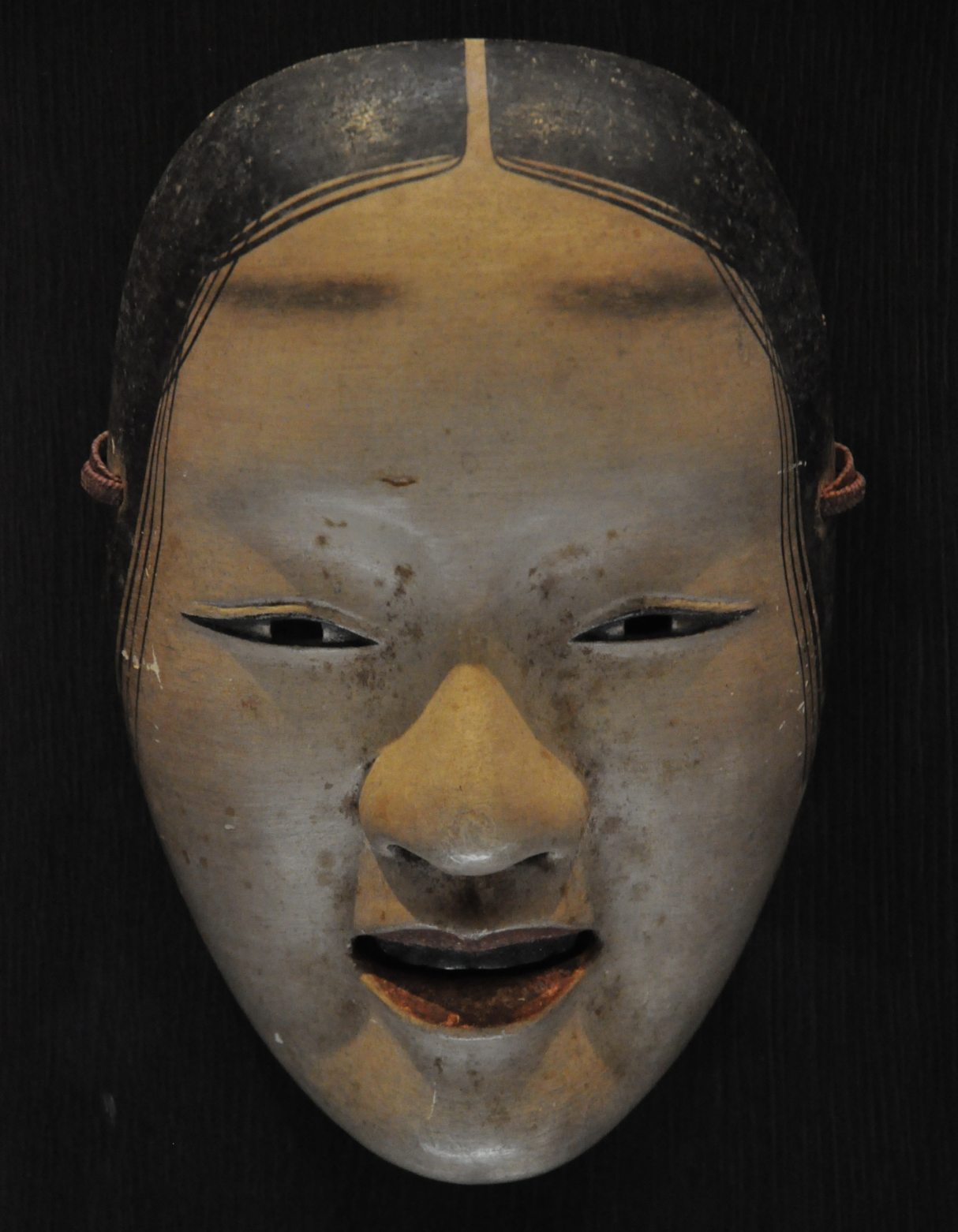
Noh mask zo-onna. Kyoto, Japan
What happens when we approach Buddhism through movement?
We usually encounter Buddhism through teachings, texts, meditation, philosophy, and sacred art. Yet across Buddhist cultures, movement and dance have also been powerful means of transmitting knowledge, transforming consciousness, embodying deities, preserving memory, and enacting Buddhist ideas.
In this five-week course, dance researcher, writer, producer, and cultural preservationist Joseph Houseal draws upon forty years of work with ancient and Asian dance traditions and his new book, Buddhist Dances, Movement & Mind, to explore five remarkably different Buddhist movement traditions: Japan, India, Nepal, Bhutan, and Sri Lanka.
Each week will open a different cultural world. Through film, photographs, movement analysis, stories from the field, discussion, and conversations with guest experts, we will look closely at what these dances do—not only what they look like.
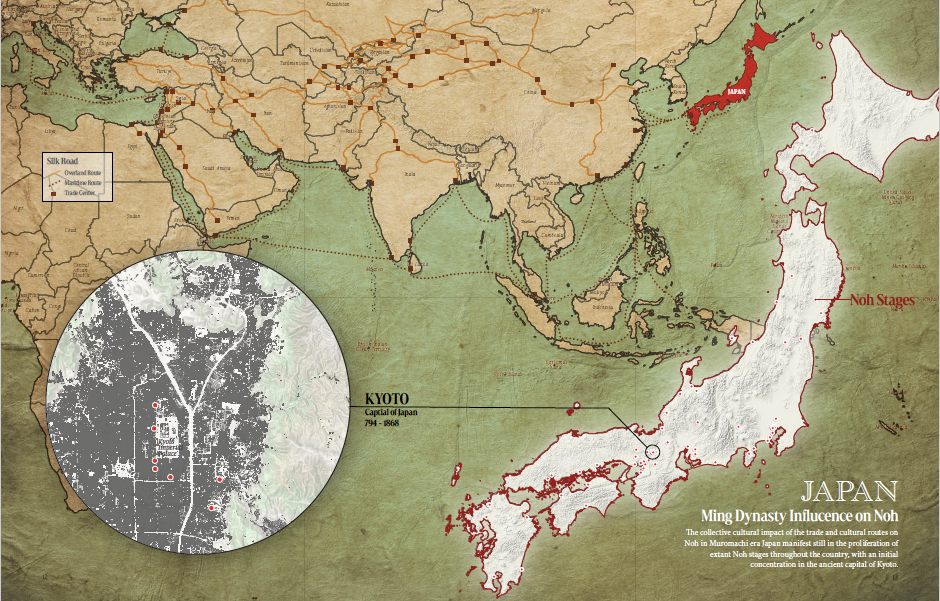
The course will also explore the book’s innovative GIS maps, created by John Houseal and Sujan Shrestha from cultural data sets assembled for each chapter. These maps offer a new way of seeing Buddhist dance: locating traditions in relation to geography, cultural transmission, pilgrimage, history, and one another. John Houseal and Sujan Shrestha will join the course as guest speakers to introduce this innovative dimension of the book.
How does movement become meditation? How can the dancing body embody a deity, transmit a teaching, preserve an ancient lineage, or alter states of mind? And what might these traditions reveal about the nature of dance itself?
No previous knowledge of Buddhism or dance is necessary. The course will be of particular interest to practitioners of contemplative, movement, healing, artistic, and embodied traditions, as well as anyone curious about the relationship between movement and mind.
The course follows the first five chapters of Buddhist Dances, Movement & Mind. A companion course in Spring 2027 will explore the remaining five chapters: China, Mongolia, Tibet, England, and the United States.
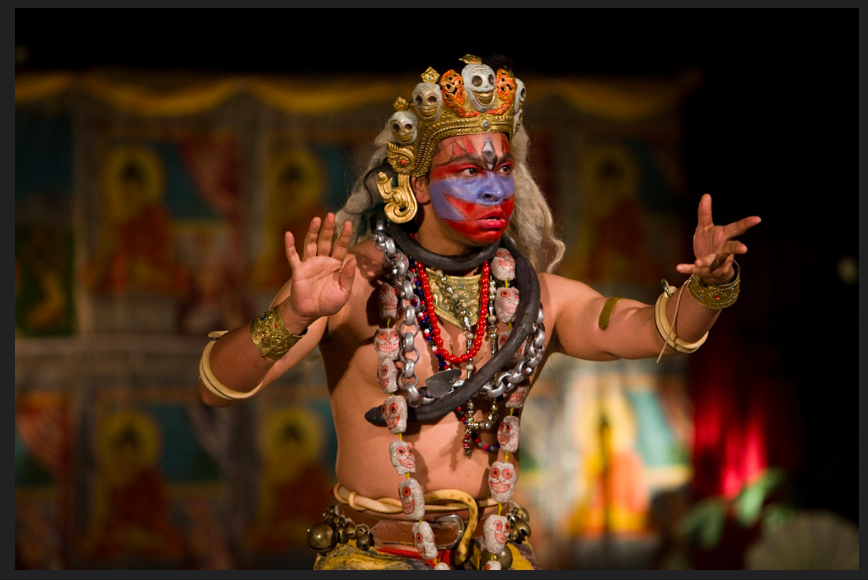
Newar Tantric Buddhist priest, Prajwal Vajracharya, Kathmandu, Nepal
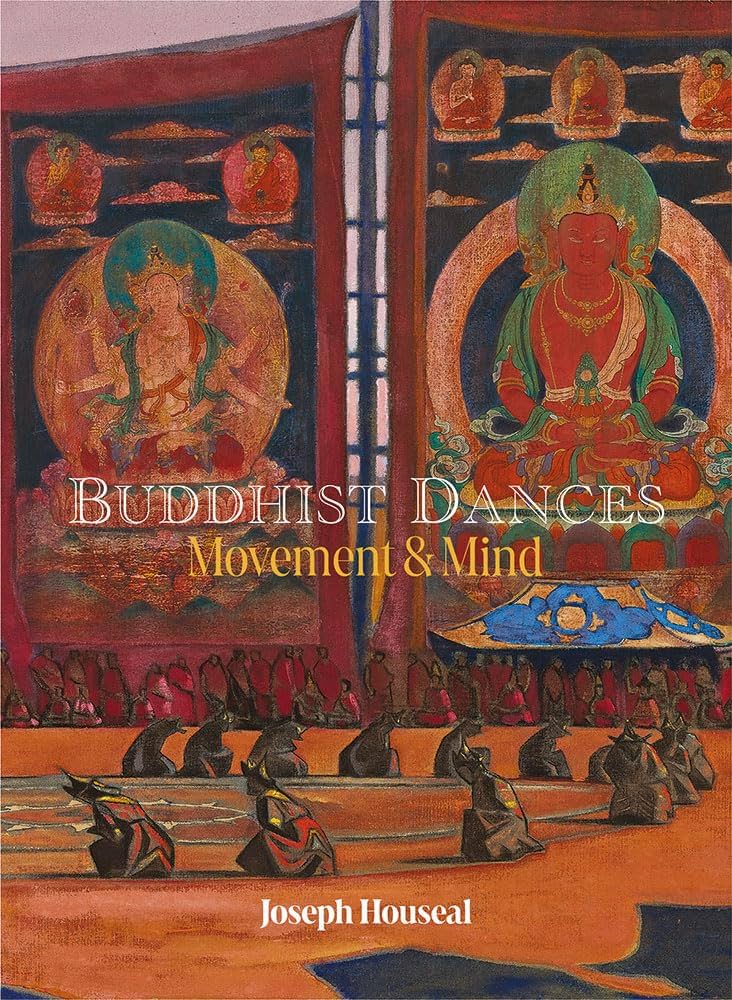
The Book
Having a copy of Buddhist Dances, Movement & Mind is highly recommended and will enrich the experience of the course. The book is a separate purchase and is not included in the course fee.
Students receive a 40% discount when purchasing the book from its publisher, Motilal Banarsidass, using the code MLBD40.
The book is also available through Amazon.
Purchasing the book is not required, however. Each week, students will receive selected excerpts from the book corresponding to that week’s class, so that everyone has access to the relevant reading and can participate fully. Materials and images will be made available in advance of each session through the Yangchenma student portal.
From Rebecca Wong’s review of Buddhist Dances, Movement & Mind:
“Movement and Mind is far more than an academic survey; it is a recovered atlas of kinetic wisdom and a poignant record of endangered traditions.”
“What if dance could be a sophisticated technology of consciousness, a moving meditation, a sacred vessel for enacting enlightenment itself?”
Read Rebecca Wong’s two-part review at Buddhistdoor Global:
Read Part 1 | Read Part 2
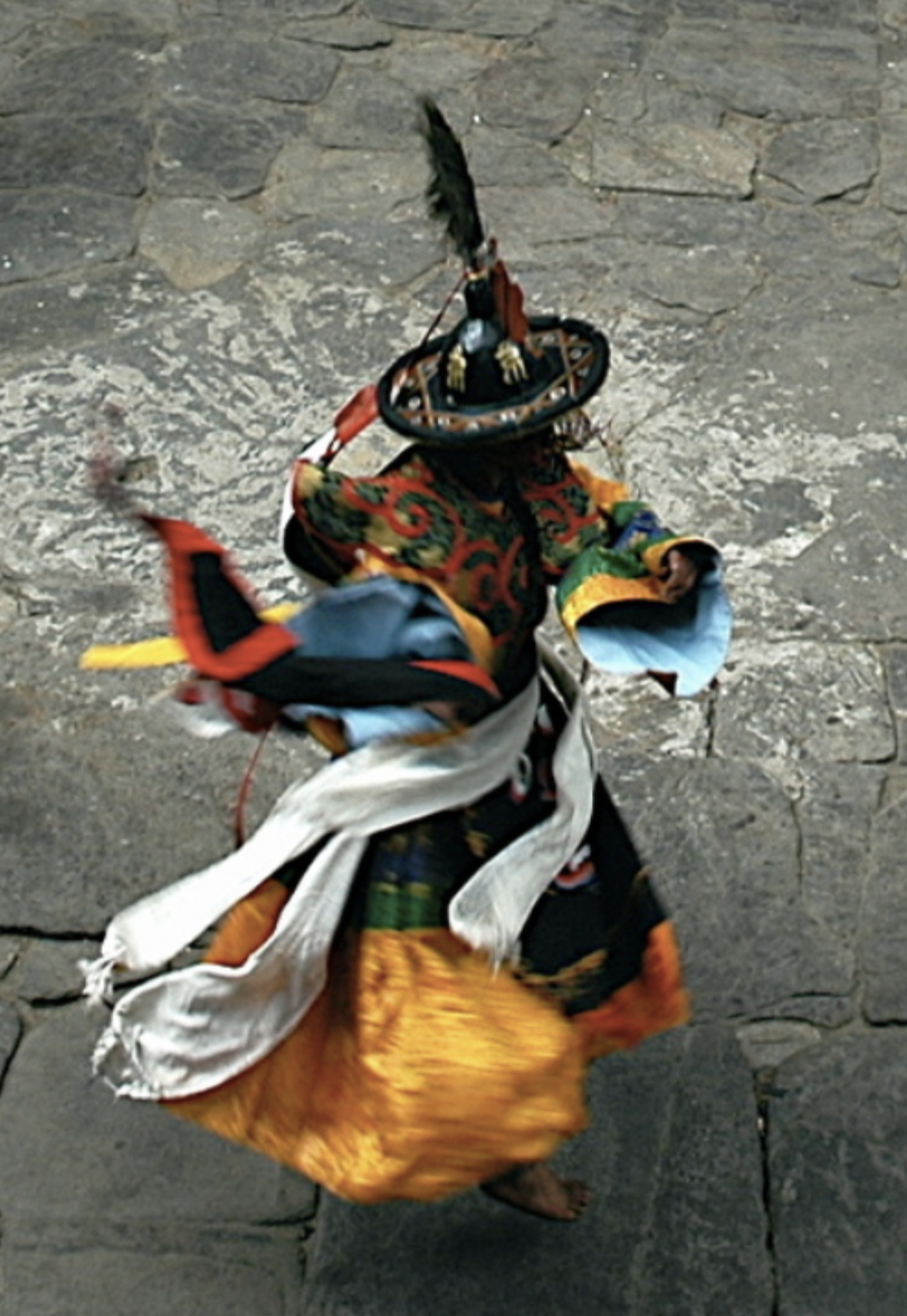
Zhanag, Black Hat Dance, Yungdrung Choeling Dzong, Trongsa, Bhutan
ABOUT CORE OF CULTURE:
Core of Culture educates the public, practitioners and scholars about disappearing cultural heritage. We are dedicated to safeguarding intangible world culture, and assisting the continuity of ancient dance tradition, and embodied spiritual practices where they originate, and beyond.

About your Instructor

Joseph Houseal
Guest Experts


The Book
Students receive a 40% discount when purchasing the book from its publisher, Motilal Banarsidass, using the code MLBD40.

Registration
-
Sign Up
$150.00


